Top 5 Klaviyo Alternatives
I’ve been building B2C e-commerce for 6 years, growing it from scratch to more than
I’ve been building B2C e-commerce for 6 years, growing it from scratch to more than $50M in revenue.
As growth happened, several platforms were replaced. The most common reasons were hitting the capacity limit, integration difficulties, or pricing skyrocketing. Or a combination of those. After years of growing with Klaviyo many e-commerce businesses are starting to consider switching. As e-commerce grows, the focus shifts. From demand acquisition to serving the existing customer base. Better communication. Smarter recommendations. Upsells. Loyalty programs. At this stage, integration complexity becomes a real challenge. Support is often needed. And this is where Klaviyo users often struggle. Here are five strong alternatives that balance power, scale, and ease of use.
1. Maestra
Why choose it?
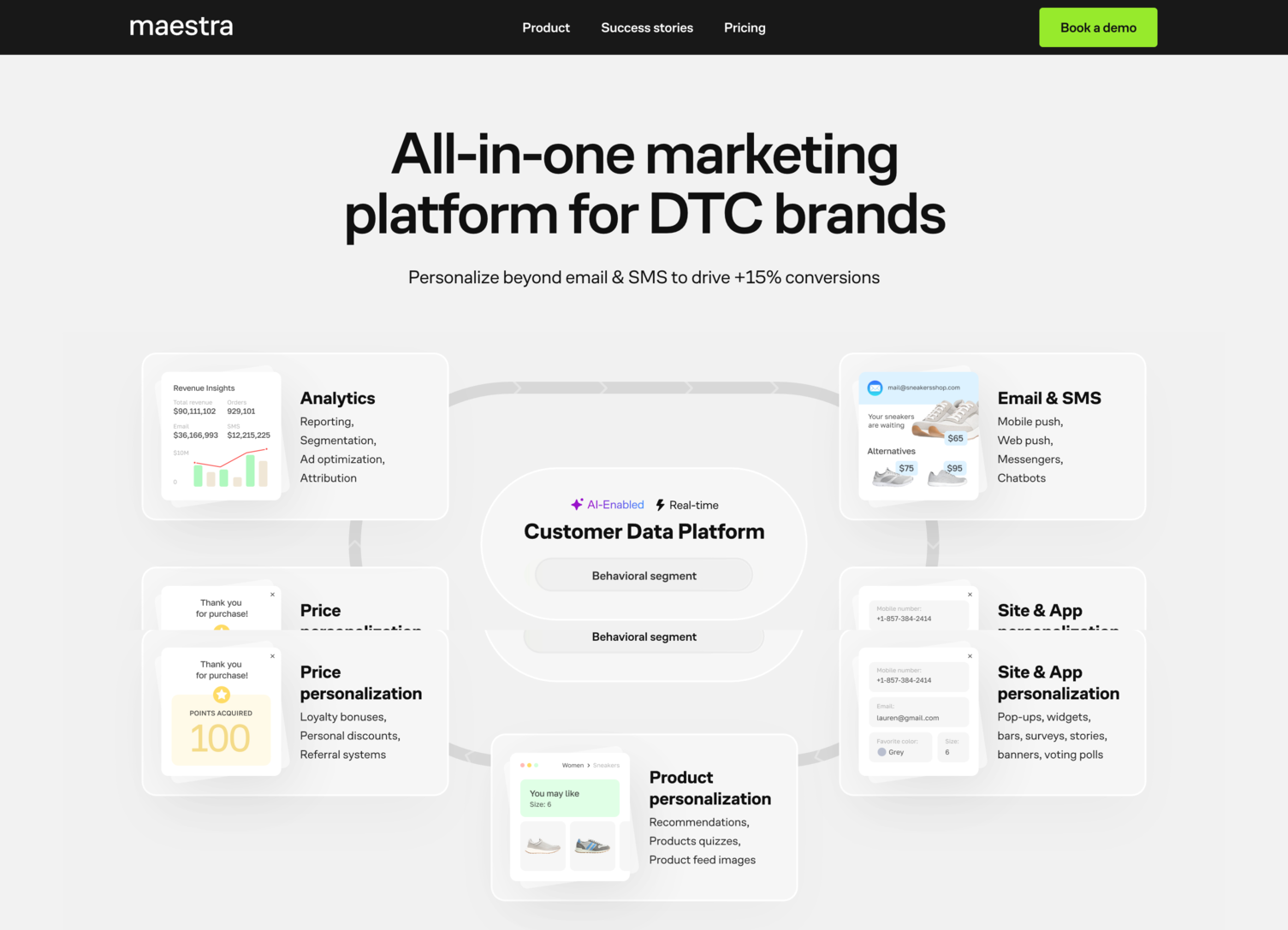
Maestra is designed for growing DTC and mid-market e-commerce brands. It stands out as a Klaviyo alternative for teams that want marketing automation, customer journey orchestration, and personalization in one place. It also goes beyond email and SMS to deliver real-time personalization on your website, loyalty campaigns, referral offers, and ad targeting.
What it does well
- It uses a real-time Customer Data Platform (CDP) to track clicks, purchases, email or SMS interactions, visitor location, and more.
- The platform dynamically personalizes site content-such as pop-ups, banners, product recommendations, quizzes and stories-based on visitor behavior.
- Maestra gives you full control over lead capture tools (forms, quizzes, embedded widgets) and visitor messaging.
- A white-glove Customer Success Manager (CSM) can help set up flows, integrations, migration, A/B tests, and campaign strategy-making onboarding smoother.
- It allows you to define and track non-revenue goals, like free trial sign-ups or survey completions.
Watch outs
- The minimum cost is quite high (from about $1,990 per month), so it’s more suitable for brands with serious growth budgets.
- The setup can be complex if you want to use all personalization and automation modules.
- There is no built-in review or user-generated content tool (e.g. collecting product reviews).
Best for
Mid-market e-commerce brands that want to orchestrate full customer journeys-online and offline-from first visit to repeat purchase. Best for teams that value expert onboarding, deep personalization, and loyalty/referral strategy out of the box.
2. Omnisend
Why choose it?
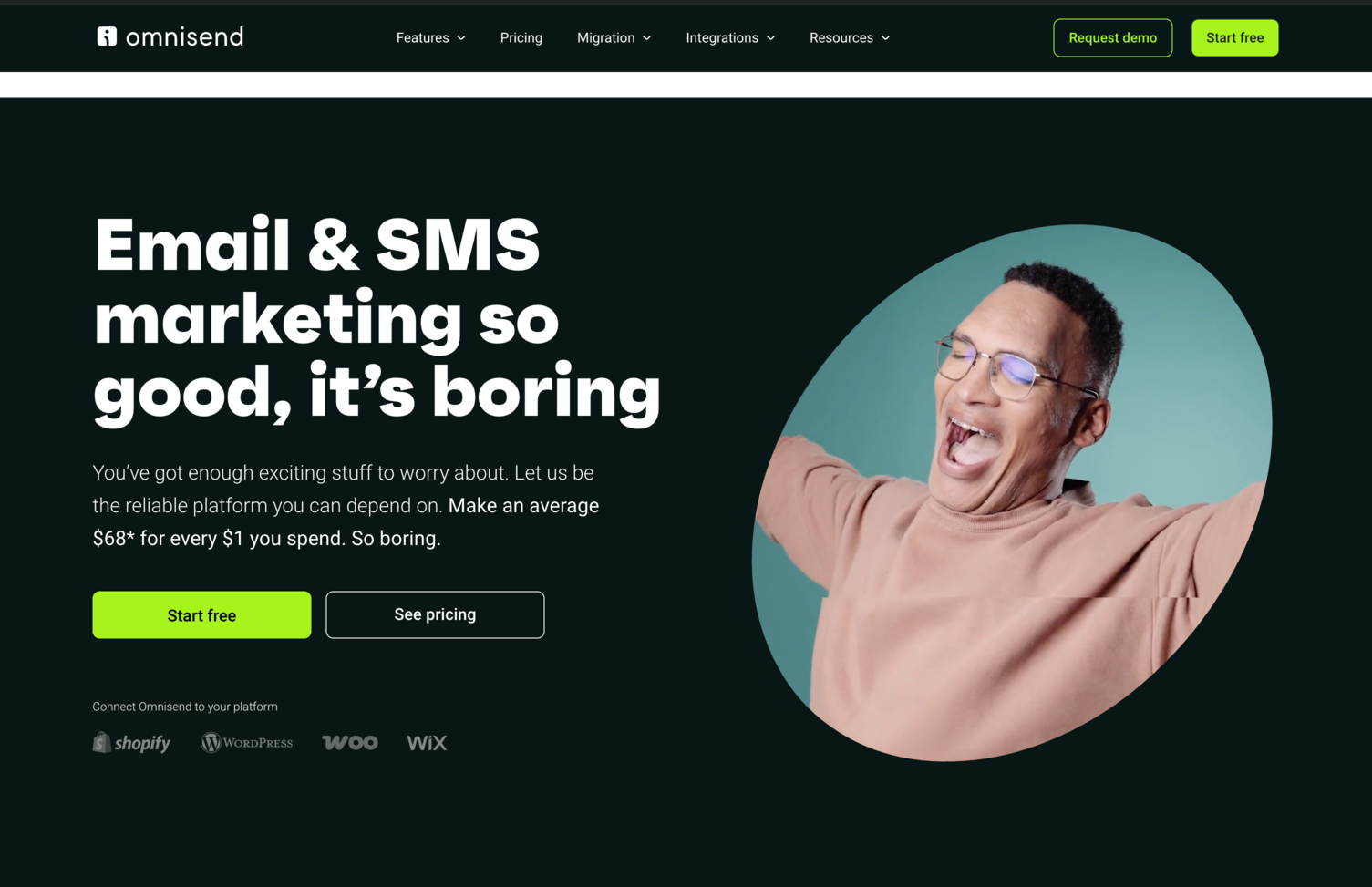
Omnisend serves mid-market e-commerce brands that want to easily combine email, SMS, and web push messaging without paying for the complexity of Klaviyo-level tooling. It simplifies multi-channel marketing so teams can launch campaigns quickly.
What it does well
- It provides ready-made automation workflows including welcome series, cart abandonment sequences, and win-back campaigns using email, SMS, and push in one place.
- The pre-built templates help marketers launch campaigns faster, without needing to build everything from scratch.
- Omnisend integrates smoothly with Shopify, BigCommerce, making setup easier for stores on those platforms.
- The user interface is intuitive, which makes it faster to get started and easier to manage than some of the more advanced tools.
- Pricing is more affordable and flexible, making it a good choice for companies that want to experiment with multichannel messaging.
Watch outs
- Segmentation is less real-time and granular than platforms like Maestra or Drip-building advanced “if this then that” logic takes more effort.
- Omnisend does not offer the same depth of website personalization tools or loyalty/referral engines out of the box.
- Reporting is useful but not as detailed or customizable as more advanced marketing platforms.
- If your growth strategy depends on highly tailored onsite experiences, Omnisend may require extra integrations or tools.
Best for
Mid-market shops that want simpler automation, basic multi-channel outreach, and easier campaign launch-especially if your priority is ease of setup and cost rather than deep personalization or real-time behavior tracking.
3. ActiveCampaign
Why choose it?
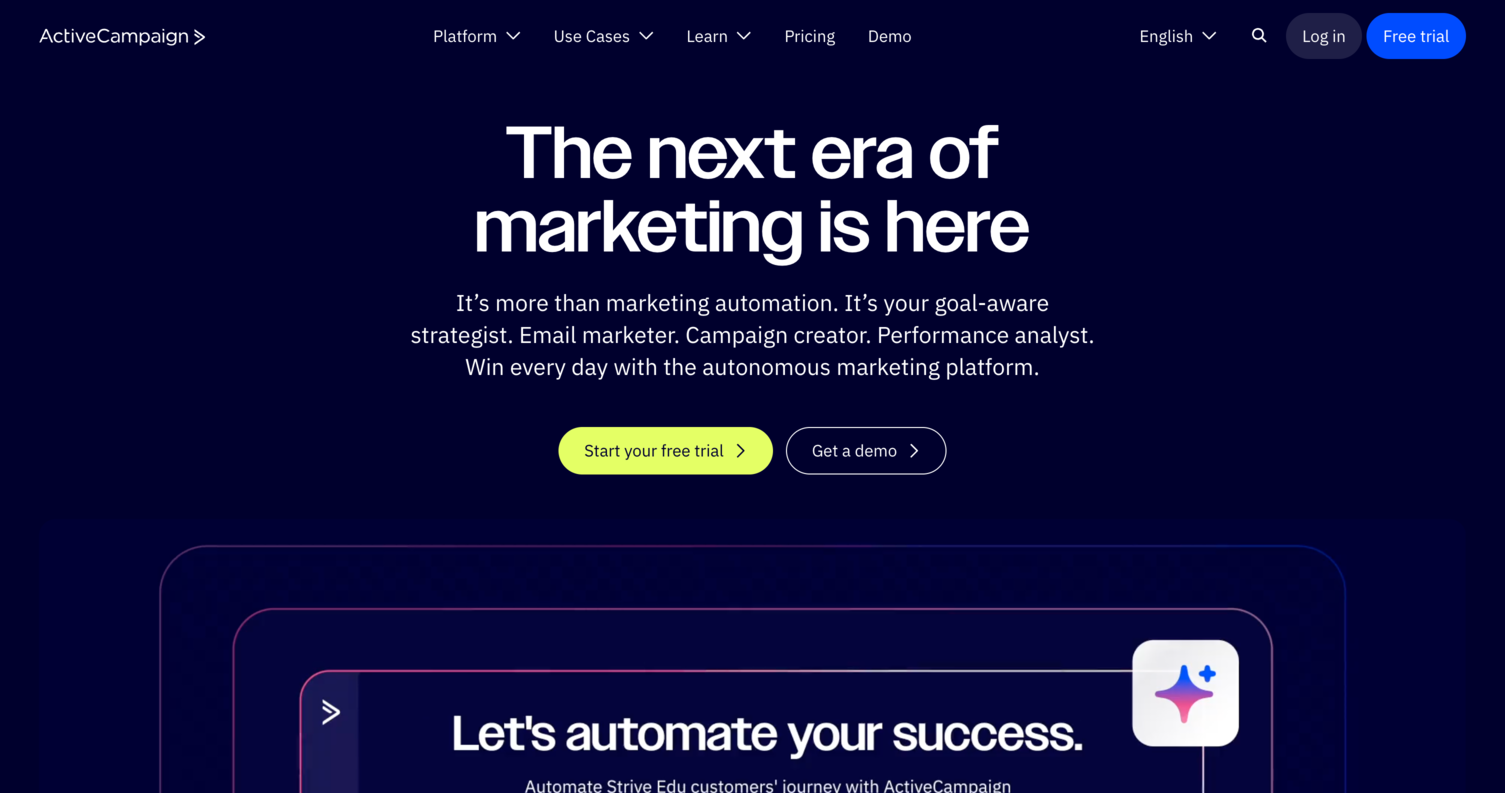
ActiveCampaign is a flexible automation and CRM solution that is a great fit when marketing and sales teams need to work closely, or when lead nurturing is as important as e-commerce follow-up. It handles complex customer journeys and sales pipeline logic.
What it does well
- You can build detailed automation workflows using conditional logic, tags, and branching steps. This allows flexible follow-ups and targeted messaging.
- It includes built-in CRM and lead scoring, so you can manage sales pipelines, assign follow-up tasks, and track interactions with leads over time.
- The platform tracks website activity and behavior, helping trigger actions based on how a visitor interacts with your site.
- ActiveCampaign can be used for both lead generation and customer lifecycle automation-so it supports both B2B and e-commerce flows.
- Pricing tends to scale without necessarily locking away important email features in only top tiers, giving more predictable automation capacity.
Watch outs
- The interface can be complex. Setting up advanced automations and CRMs takes time and learning.
- It is not focused specifically on e-commerce. Automated abandoned cart or post-purchase flows might need manual setup or help from third-party tools.
- ActiveCampaign doesn’t come with built-in loyalty, referral, or review collection systems. These usually require integrations.
- On Shopify-heavy stores, Klaviyo or Maestra might offer smoother out-of-the-box trigger options.
Best for
Mid-market brands that want to nurture leads, manage sales processes, and build sophisticated customer journeys. This is a good option where marketing and sales teams want to share workflows and data in one place, or where automation is used for both e-commerce and lead-based marketing.
4. Brevo (formerly Sendinblue)
Why choose it?
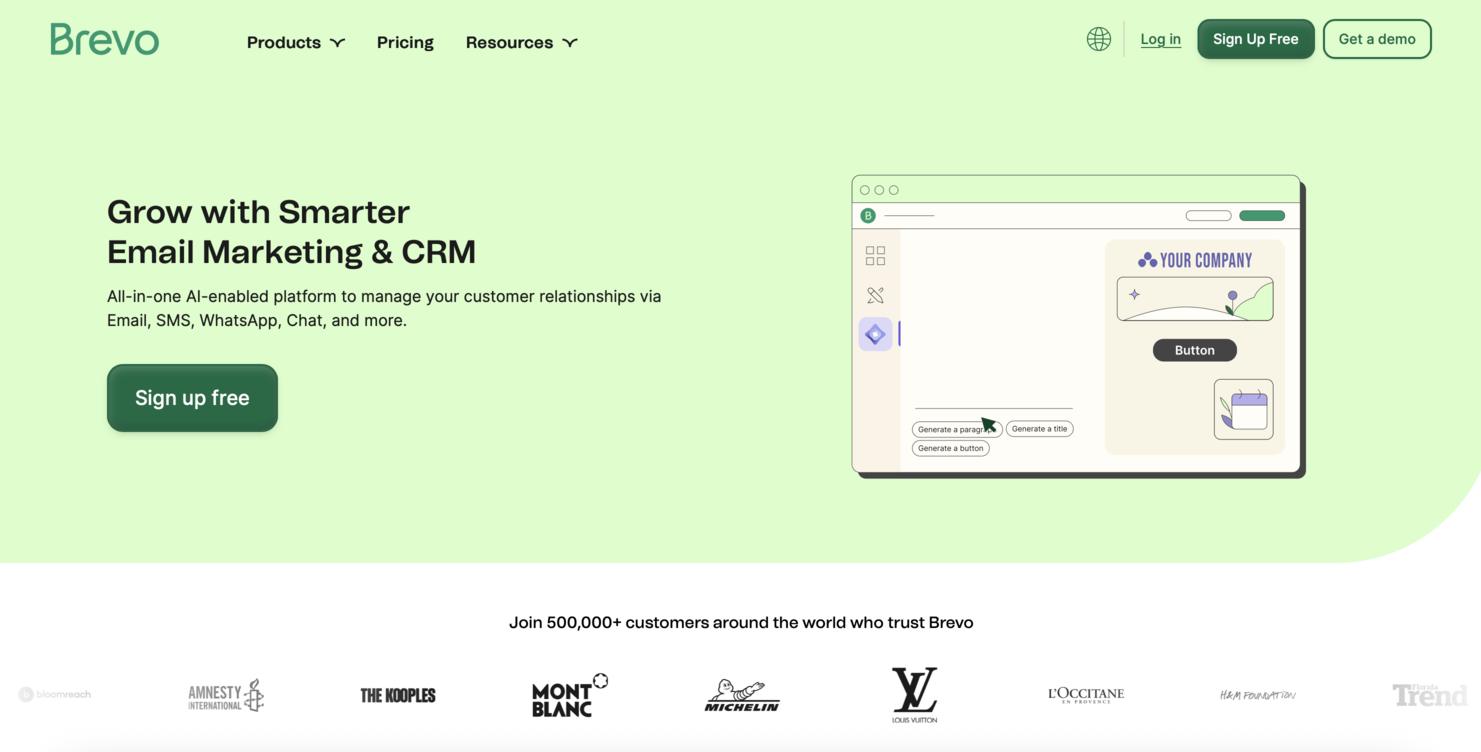
Brevo is a solid pick for mid-market teams that want email and SMS marketing automation without paying per contact. Its pricing model focuses on email volume instead of list size. This can be very cost-efficient for companies with large audiences.
What it does well
- You can store an unlimited number of contacts, and the pricing is based on the number of emails sent, not how many people are on your list.
- It offers email, SMS messaging, live chat, and basic CRM tools in a single platform-giving you multiple channels from one dashboard.
- Brevo supports multi-step automation workflows that are good for simple welcome flows or follow-up emails.
- It is GDPR-friendly, which is especially helpful for European users and compliance.
- Brevo makes it easy to add transactional emails, newsletters, and simple sequence automation without major setup overhead.
Watch outs
- The tool is not built specifically for e-commerce. Triggering cart abandonment or price-drop campaigns often requires manual configuration or external tools.
- Brevo does not provide native tools for e-commerce revenue tracking or deep analytics on purchase behavior.
- Its automation logic is more limited than what you get with Klaviyo or more advanced marketing tools-complex branching or conditional flows are harder to build.
- If your growth plan involves advanced personalization or onsite customer journey triggers, you may outgrow Brevo’s out-of-the-box functionality.
Best for
Mid-market and growing e-commerce businesses that need to scale contact lists affordably, and want essential automation without paying a premium for contact-based pricing. It works well when your messaging frequency is moderate, and marketing automation is simpler.
5. Drip
Why choose it?
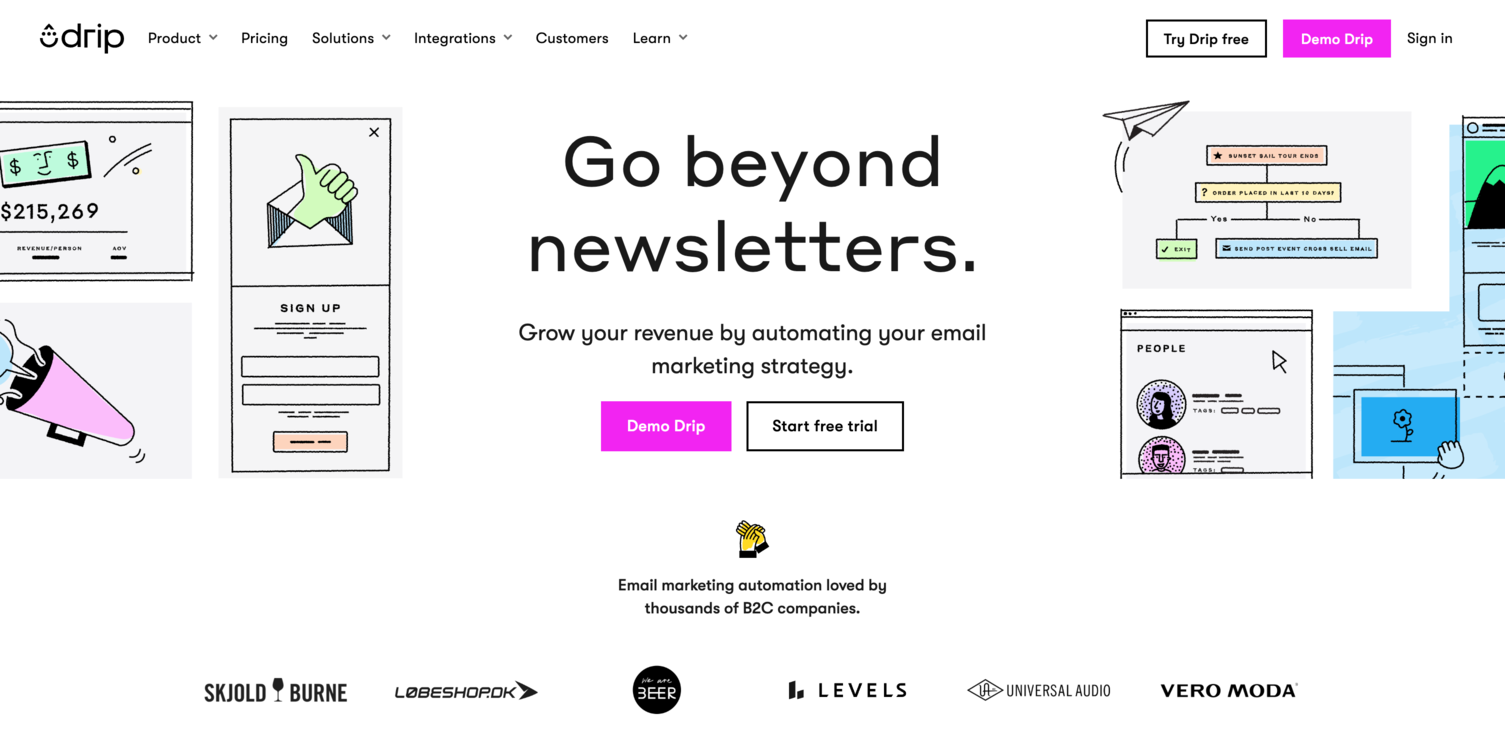
Drip is ideal for DTC and mid-market stores that want to automate email and onsite messaging, with strong segmentation and data-driven workflows. It’s less heavy than enterprise marketing suites but more powerful than basic email tools.
What it does well
- It syncs order and behavioral data from e-commerce platforms like Shopify, WooCommerce, BigCommerce, and Magento, so triggers can be tied to cart updates, purchases, and customer behavior.
- The visual automation builder helps you create workflows such as cart abandonment, post-purchase follow-ups, win-back campaigns, and product recommendations.
- You can segment subscribers dynamically using behavior, purchase history, and lifecycle criteria. This makes targeting more refined and timely.
- Drip offers pop-ups and onsite forms to capture leads and engage visitors directly on your site.
- If your list is large, Drip offers free migration assistance and one-on-one onboarding to help with the switch.
Watch outs
- The learning curve can be steep for beginners; building complex workflows may require experience.
- Drip’s pricing grows with the size of your list. It may become costly as contacts grow.
- Some advanced analytics, custom reporting, or integrations may need manual setup or external tools.
- Support for large users or advanced customization may be limited unless you’re on a higher plan.
Best for
Mid-sized online shops that want automated email flows and visitor capture tools, but don’t want to invest in the full-blown complexity of enterprise marketing systems. Especially good when you want strong e-commerce triggers and behavior-based segmentation.
For smaller brands, any of these platforms can cover the essentials and help you grow steadily. But if your marketing spend is already above $3,000 a month, Maestra becomes the natural step up. It brings advanced automation, real-time personalization, and dedicated support that justify the investment.
Note: This article may contain affiliate links. Please read our full disclaimer.
Have something to say? Join the discussion on LinkedIn or subscribe to stay tuned:
Max Roslyakov
Founder, Xamsor