The Simple Explanation Of Digital Marketing Strategy. Channels Framework.
Most businesses need digital marketing now. From the international corporations to the artisan bakery next […]
Most businesses need digital marketing now.
From the international corporations to the artisan bakery next door to your apartment.
If your business is going to survive and grow, you need to get it right.
But how?
In this article, I will share the framework I refined for 15 years.
Using this approach, my team has built from scratch an e-commerce business with over $50M in annual revenue and 100% YoY growth.
I have utilized this framework to assess existing businesses during M&A deals, assist in building startups, develop SaaS software with $100M+ in ARR, and explain digital marketing fundamentals to college students and top enterprise management.
It’s the beauty of this strategy – it’s universal and intuitive.
How to ramp up a marketing engine? How to prioritize the investments? Do we have gaps in our marketing strategy? Where should we expect better ROI?
The proper approach will help you to find answers.
If you already have some experience in digital marketing, you may be curious why not use the classic funnel explanation, such as AIDA.

Attract clients, make them Interested, then cast their Desire to buy and at last motivate them to make a desired Action – usually purchase.
First, the funnel framework does not give you any actionable hints. You may understand the underlying logic but don’t know what to do.
Second, in the AIDA model, the priorities are vague. While you usually have limited resources and want to do first things first.
I always preferred a more tactical but precise and actionable approach. Let’s dive into it.
Top priority. Your existing clients, aka Customer Relationship Management, aka CRM.
Selling more to the existing customer database is more accessible than finding new ones. Because you already have their trust. Even if they only gave you an e-mail address and never purchased anything yet.
It’s free to reach out to people who put themselves on your mailing list.
So the return on investment is enormous, even if the investment is tiny.
That’s why you receive so many promotional emails. That’s why you see annoying pop-up windows when visiting new sites. That’s why businesses offer an additional discount for having your mobile number. It’s all about CRM channel activation.
Here’s an example from adidas.com. It’s hard not to click it, ha?

During my time in fashion e-commerce, up to 25% of revenue and more than 40% of growth were driven by e-mail marketing. Fashionistas love new arrivals. So did our bottom line.
My recent employer – Semrush, has millions of emails from their free software users. Converting them into paid ones is a substantial source of revenue. E-mail marketing is the critical engine behind this conversion.
I think you got it. Work with the existing audience first.
If you need help memorizing that the clients should be at the center of your strategy, here is the picture—your client’s database. Red hot and ready to buy:
But what if you don’t have any customers? Or don’t you even have a product yet? CRM channel is still your first choice.
Make a landing page. Describe your future product. Collect email addresses from interested visitors.
Get those people on your mailing list, and they’ll come back when you announce the launch.
Your e-mail database is your future revenue.
When I was leaving Semrush, I created xamsor.com as a one-pager with an e-mail lead form and shared the link in my farewell post on LinkedIn.
It was the entire content of my so-called website back then:
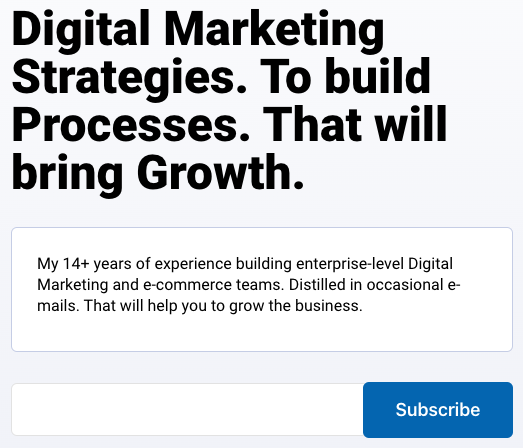
Two hours were invested, and tens of e-mails were collected. One of the subscribers soon became my first consulting client.
I hope I have convinced you.
Work on the CRM circle first, and do it right.
What is “right”? It’s another big story. Make sure to subscribe not to miss it.
But how do you get new customers?
That begins with the next channel.
Step Two: Search Engine Marketing
Here is the fact. Some of your future customers are actively working on buying your product right now. Nowadays, the first thing most people do when they need something – they Google it. Information, clothing, reviews, restaurants, real estate, recipes, you name it. Everything can be found with search engines.
Your business should be easy to find with a search. Otherwise, people will shop elsewhere.
Attracting visitors from search is the next layer of my framework. You are not creating a new demand but actively pulling the existing one to your website. It’s a “warm” circle of your audience.
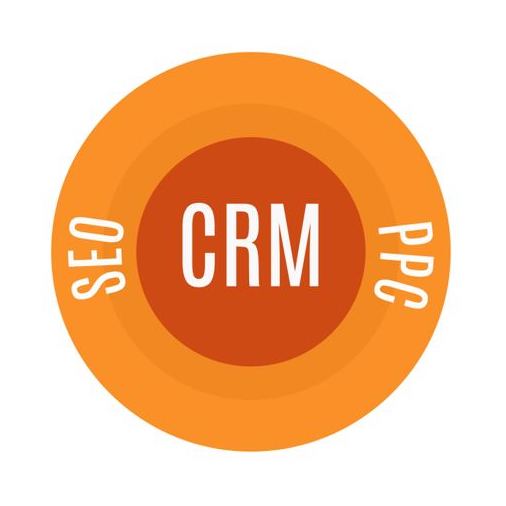
To keep things simple, I use Google as an example.
Just keep in mind that the same principles can be applied to most platforms where people do search. Such as Bing, YouTube, Amazon, Booking.com, etc.
There are two ways to be found on Google.
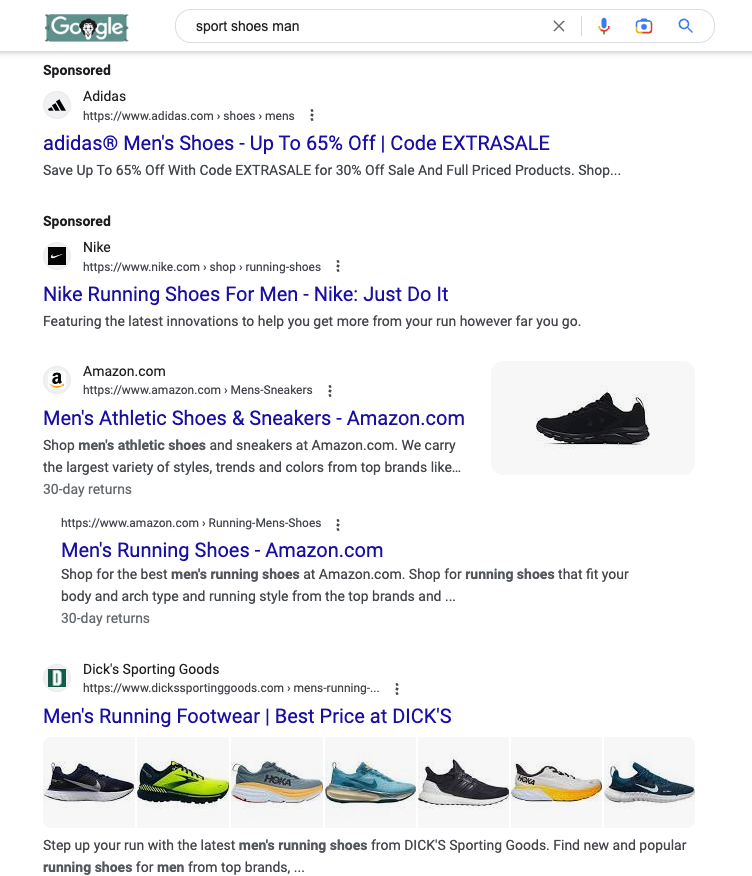
The paid ads and organic search results.
- You can pay Google to advertise your site on the top of the search results page.
- Or you can build your site content to appear in search results for free organically. It’s a block of results below the paid promotional links.
I’m sure you know what it looks like:
Which should you choose to promote your business? Usually both.
Let me illustrate how it works.
With the paid ads, you appear in search results in minutes. Create a Google Ads account, choose keywords relevant to your business, write copy, and select the desired geography. Done. You are getting traffic to your website. Fast and easy. Cons? You are getting the traffic only while you pay. Every visitor costs a few cents or dollars, depending on the niche. That’s why this tactic is often called Pay-per-click.
Creating content and optimizing your website to be ranked high in the organic search results takes a long time. Weeks and even months of work are needed before your website will get some traffic from the organic search. This tactic is called SEO – Search Engine Optimization – and is a long game.
Here’s an excellent illustration of this concept from Semrush:
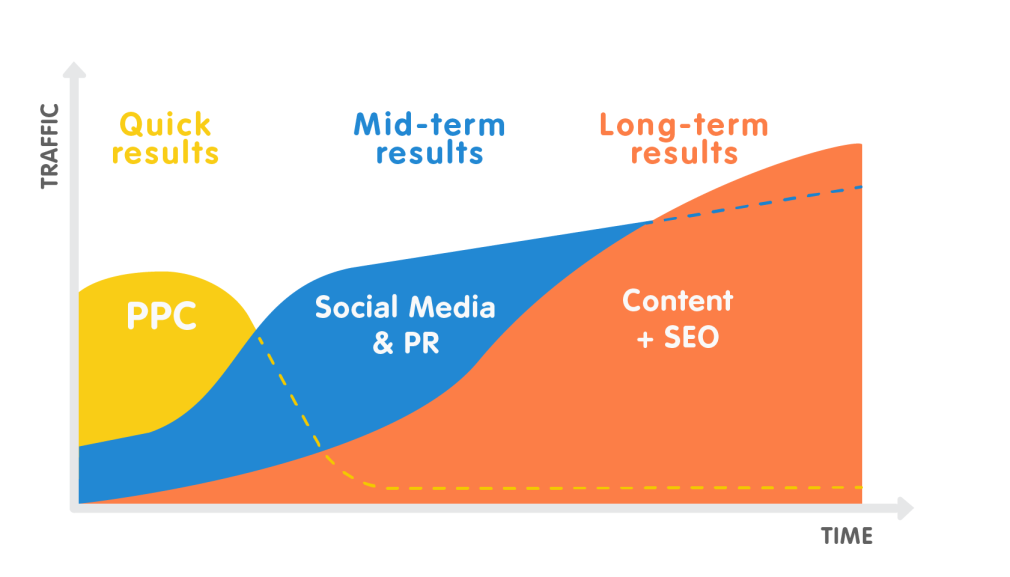
However, after you start getting this organic traffic – it’s yours for months and years. The magic begins to happen. You are getting a new business without paying a penny. And if you continue to invest your efforts in SEO, results are growing fast.
So the question is – how to prioritize and combine paid and organic?
Well, it’s art and science, but the rule of thumb is to do paid tactics first.
Pay-Per-Click
What you will pay for the traffic should be lower than your margin from online sales. So you’ll start earning money that you can reinvest in future development.
Playing with keywords, ad copy, and your website pages will provide you with quick real-life feedback. Paid ads are straightforward to experiment with. You will soon know how to get the right traffic and convert it into your new business. It will help a lot with the whole marketing strategy.
Are you confident in your website’s offerings?
What is your conversion rate from clicks to sales?
What is your marketing Return On Investment?
Pay-Per-Click is a great way to figure things out quickly.
Remember that paid ads will not help rank your website better organically. It only works while you spend.
However, data from PPC experiments can often help to build better content to grow your organic traffic from SEO efforts. You will know what keywords and landing pages work best without waiting weeks for results to appear. So your SEO efforts will be data-driven and better organized.
With that in mind, let’s briefly talk about SEO.
Search Engine Optimization
Often referred to as SEO.
SEO is the process of creating content and improving the organic search rankings of your website. High rankings for the keywords relevant to your business will eventually bring traffic and sales.
The initial step, similar to Pay-Per-Click, involves selecting keywords – the search queries you want your website to be discovered through.
Your selection will be more conscious if you do some homework and already have paid campaigns up and running.
The second step is also similar – you write some copy. But it is much more in-depth this time. Because in SEO, content is king. It should be valuable to visitors and help them get what they seek. It should also include your desired keywords.
When working on SEO, you’re not just creating content for people.
You’re also writing it for the search engines.
Google works hard with its algorithms to ensure only the most relevant content will reach the top of organic search results. Creating content both visitors and Google will love is an art and science. I’ll cover my tactics in more detail in future posts.
So stay tuned.
For now, you should know only a few points about SEO:
- Winners take it all. The rare person will click the website outside the TOP-10 results in Google. Half of the searches don’t go beyond TOP-3. So you should be at the Top-10 to be visible.
- It takes a long time to hit Top-10, especially with the new website. Don’t expect fast results.
- SEO done right can eventually remove the need to pay for clicks entirely. Some nine figures businesses on the market get half of their sales from organic traffic and spend zero dollars on pay-per-click.
Let’s round up the Search channels chapter.
Use both paid ads and organic search. Start with Pay-Per-Click (PPC) ads for quick visibility and data collection. Then, use SEO (Search Engine Optimization) to create content for long-term growth.
Combining these strategies can eventually reduce or eliminate the need for paid ads as organic traffic increases.
Step Three: Retargeting
The retargeting channel is about guiding prior visitors back to your website.
Many visitors to your website will leave without buying.
This is a fact of doing business.
Sometimes it’s because they got distracted by other results for the same Google search.
Sometimes they had other business to attend to.
Sometimes they were only searching casually in the first place.
Ultimately, the reason doesn’t matter.
Many of these people won’t become your customers no matter what happens.
You can, however, give yourself extra chances to get their attention back on your business because they are probably still deciding on a purchase and remember your website. They are “warm” in the terminology of my framework.
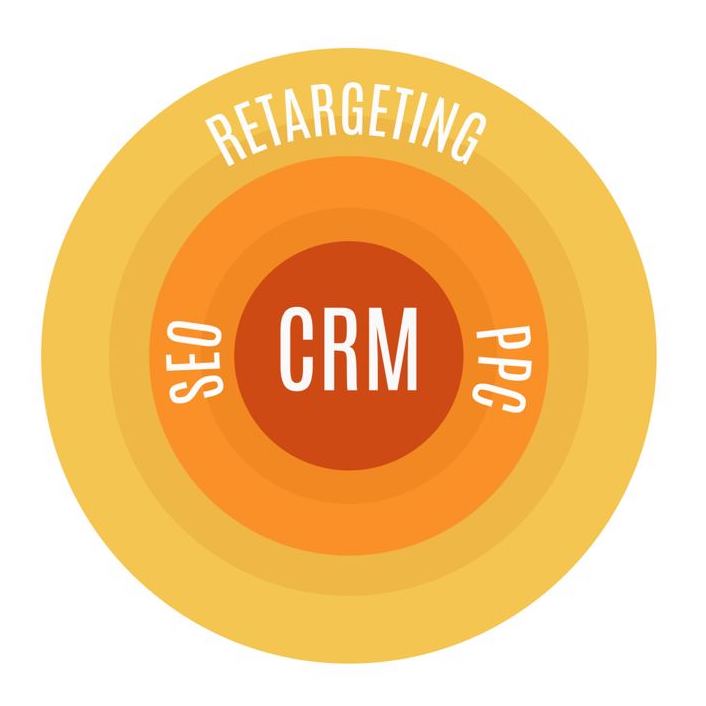
You’ve likely experienced “retargeting” without even realizing it.
Remember the hotel room you considered booking on a travel site, only to see it follow you across other websites you visited later? Or the items you added to an online shopping cart, which seemed to appear everywhere else you browsed? It was a retargeting in action.
I was visiting the Adidas site today. This is how Yahoo Finance looks for me now:

These tactics are cost-effective because you pay to the retargeting platform only when the user clicks your ads.
So your ads are shown to users essentially for free. Adidas spent nothing to show me the ad above.
The only nuance is that you can’t start doing this immediately when you launch your online marketing. Because to launch this technology, you should have data about a significant number of your prior visitors – usually 1000 or more.
That’s why I keep it in third place.
Step Four: Affiliate Marketing
Also known as partnership marketing.
This is how you get access to visitors to other sites and customers of other businesses.
Ideally, people, your business can have a symbiotic relationship with.
For example, imagine you run an e-commerce website selling fashionable shoes.
You might choose to partner with a fashion blogger. They are considered a “publisher” in a affiliate marketing terminology.
Ideally, one who already features similar shoes on their blog.
This person would put links on their blog that direct users to your website.
In so doing, some members of their audience would become your own clients.
It’s a little bit “colder” audience versus the previous circles. But they have the relevant interests, so chances to covert them are quite high.
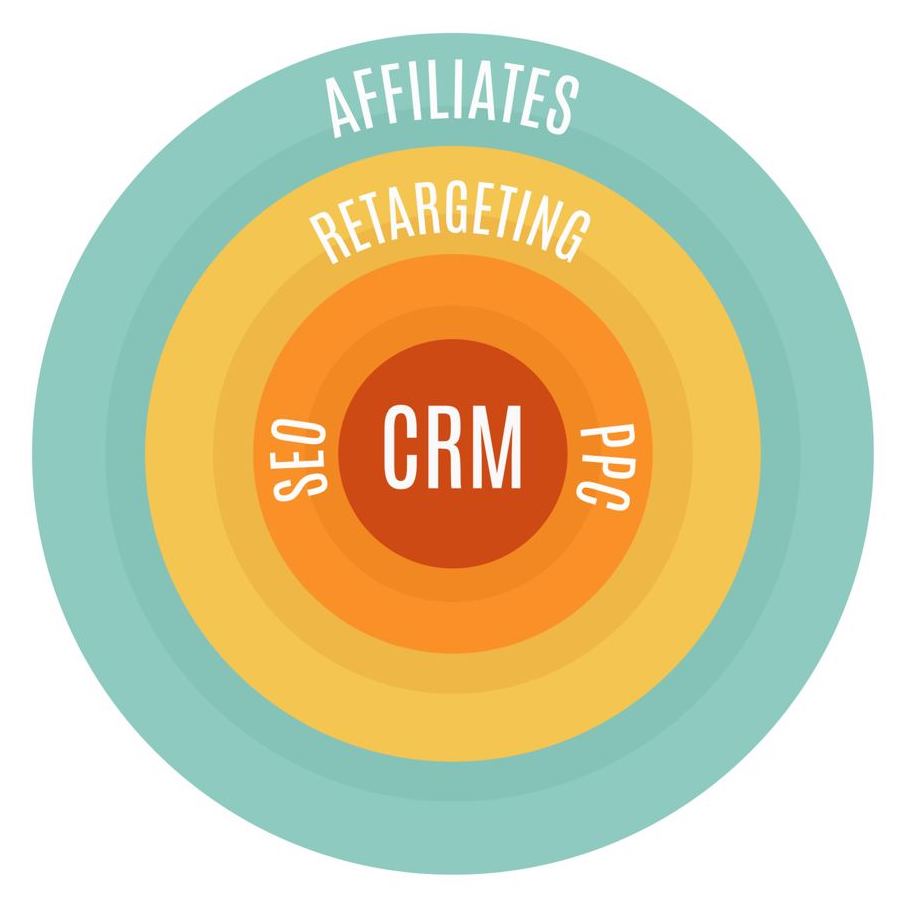
You are paying the publisher for each user that makes a purchase after using their link.
The great part is that you don’t need to search for and negotiate each potential partnership individually.
There are many platforms that gather tech solution for this tech, businesses and publishers in one place. I was using Impact, ShareASale and CJ to name a few, but there are tens of them.
Large businesses may use their own proprietary platforms. For example Amazon is running one of the biggest affiliate programs in the world.
That all sounds quite nice, but what’s the catch?
Well, the publishers has to agree to the partnership too.
To convince them to join, you should already have some reputation and provide the information about about your business metrics such as traffic, conversion rate, average check, reviews and list of the bestsellers.
To gather this data you should have a few months of traction.
That’s why this method ranks fourth in my digital marketing strategy framework.
Step Five: Media Buying
Now it’s time to be serious about expanding your reach.
Every Internet user can be reached with some sort of media ads.
This channel is where the opportunities became endless. And so did budgets.
Media Buying is accountable for all other types of ads you can imagine online.
The most common format is old good banner that advertises something on a website you visit.

But actually, the Superbowl sponsorship also falls here. It’s also media-buying with preparation, production and placement budget worth above $10M per minute of the screen time.
Regardless of the medium – be it a website page, street billboard, or Super Bowl sponsorship – the underlying logic remains consistent. Only a small percentage of those who see your advertisement may be interested in the product featured. However, due to the vast amount of attention garnered, you can still capture interested leads from the river of people’s attention.
You can get much business using just the previously discussed marketing channels. I actually know businesses with tens of millions of dollars in annual revenues who never spent a penny on media buying.
But if you want to build a nationwide brand and scale up your business into really broad audience, you’ll hardly avoid media ads.
This statement is true for a very simple reason.
When you work with your existing clients, then with search engines, then with retargeting, and then with affiliate marketing – you don’t create a much of new demand. You’re basically attracting the existing one. You are also not stealing business from your competitors – because their customers already have a solution for their needs – they don’t search for it.
With media ads you are creating a new demand and push new audience into the marketing “circles”.

Cool summary.
I love to give an example of ice cream when I explain how digital marketing works.
Imagine a very hot summer day, and you are the ice cream shop owner.
Some people will make an effort to find ice cream proactively. They are the existing loyal customers. My daughters are definitely in this cohort.
Others will think, “I want ice cream. Where can I buy it?” and will enter the store on their route. It’s Search cohort.
Some individuals may feel a sudden craving for something cold. They might walk past the supermarket and think about ice cream without acting on it. However, they’ll see an “Ice-cream” sign and an arrow on the sidewalk at the end of the building. This will prompt them to return and make a purchase. It’s Retargeting at work.
You can promise profit share to a few people. They will bring their boxes with dry ice, put them on the streets around the store and start selling your ice cream. The additional sales will come from people reached by your Affiliates’ network.
You can go wild and buy advertising on billboards around your store. It will show people enjoying ice cream on a hot day and share your store address. It will push the idea of ice cream into many people’s minds. They weren’t thinking about it, but now they do. So many of them will be excited enough to adjust their plans and come to your store.
Understanding Social Media Marketing, aka SMM
Many of you will be surprised to see SMM in a digital marketing framework so late.
It’s not because social networks are not necessary. They are essential.
It’s also not because you shouldn’t develop your business’s social media presence early. You should.
But if you want a well-structured view, you should first understand the general concept we covered earlier in this post.
Because social media marketing acts on and strengthen all layers of the framework.
Businesses talk directly to their existing audience via their accounts on social media.
Search and sharing are massive drivers of traffic inside the networks. You can find groups, communities, discussions, businesses, enthusiasts, and marketplace offers about any imaginable topic.
Facebook and LinkedIn are some of the most extensive retargeting networks
Thousands of potential Affiliate marketing partners have grown their social media accounts
And media buying opportunities are enormous there.
That’s why SMM is a layer covering all circles of the digital marketing framework, not a separate circle. And that’s why “doing SMM” is not a single process but a bunch of them ramping up while you move from the center of the “target” to the outer layers.

A simple example is to create a Facebook group early in your marketing plan and invite your users to join it. You can use this group to help users, hear their voices, and ignite discussions about relevant topics with your audience.
Developing your presence on Facebook over time, you will start using their retargeting tools, paid promotions, and media buying opportunities.
In the ice cream shop example, create a club with meetings, a newsletter, recipe swaps, and tastings. Develop it over time to grow and engage your potential customers’ database.
Conclusion
Now you know the fundamentals of digital marketing channels strategy.
It is the simplified model of actual processes inside the marketing function of every company in a digital era.
The absolute basics that everyone needs to know.
There are few other topics you will need to understand to get the full picture of digital marketing. Such as Product Messaging, Analytics and Sales attribution. I’ll get back to them in a while.
For now, thanks for reading and feel free to join a discussion on LinkedIn.
Max Roslyakov
Founder, Xamsor